5 Best Living Room Ideas for Apartments to Elevate Your Style
Apartment living often comes with space limitations, but that doesn’t mean you have to sacrifice comfort or style. In fact, designing a small living room can be more exciting because it challenges you to think creatively and intentionally. Every piece of furniture, every color choice, and every decor element plays a crucial role in shaping the overall feel of your space.
A well-designed apartment living room should be a perfect blend of functionality, comfort, and aesthetics. It should reflect your personality while also serving your daily needs—whether that’s relaxing after a long day, hosting friends, or working from home.
In this detailed guide, we’ll dive deep into five of the best living room ideas for apartments. Each section will provide practical insights, design strategies, and inspiration to help you create a space that feels larger, more stylish, and truly yours.
1. Embrace Minimalism for a Clean & Spacious Look
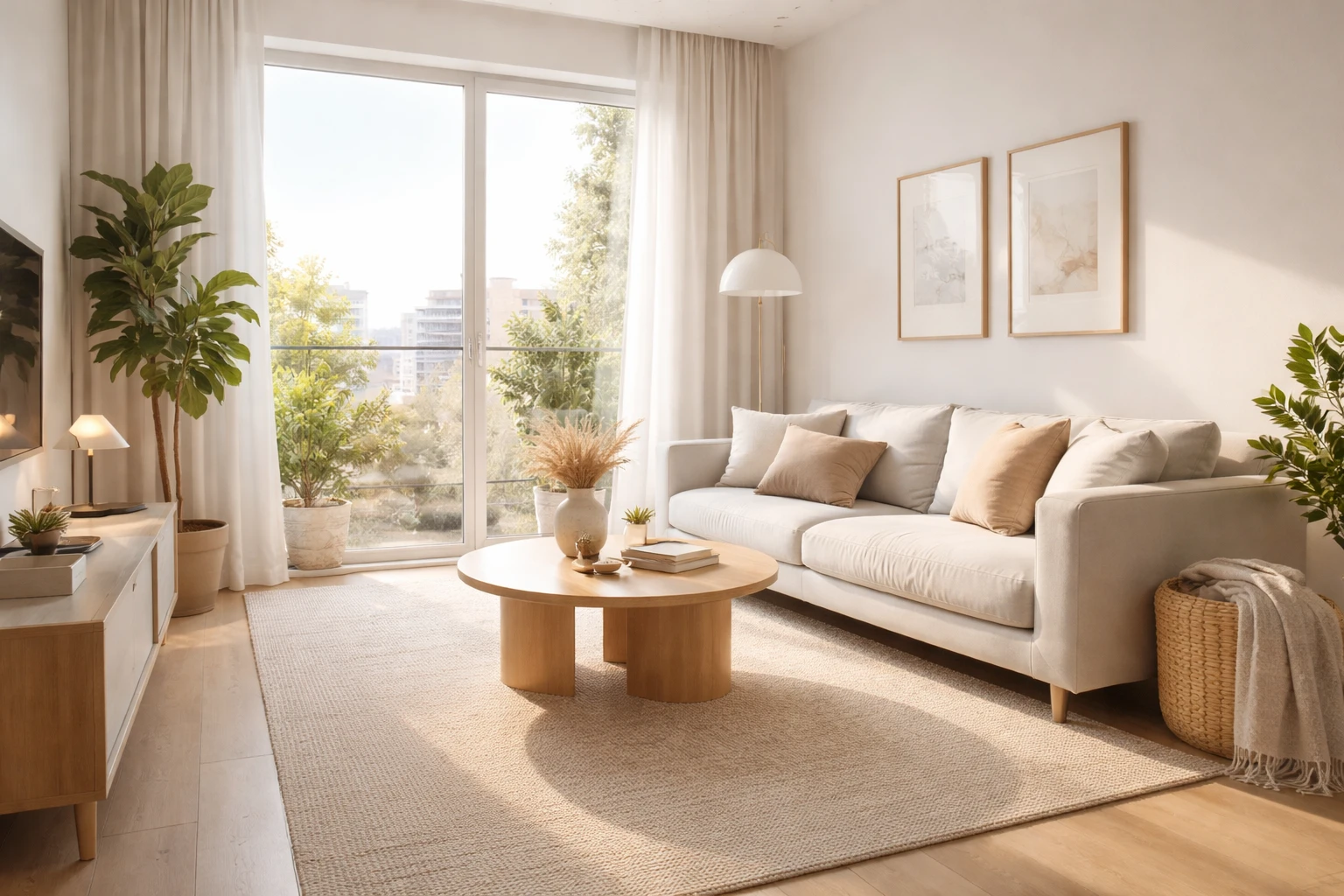
Minimalism is one of the most effective design approaches for apartment living rooms, especially when space is limited. At its core, minimalism is about simplicity, functionality, and intentional living. Instead of filling your space with unnecessary items, you focus only on what truly adds value—both visually and practically.
The first step to achieving a minimalist living room is decluttering. Remove items that no longer serve a purpose or don’t align with your aesthetic. This process alone can instantly make your space feel larger and more breathable. Once you’ve cleared the clutter, you can begin to build your design with intention.
Color plays a major role in minimalist interiors. Neutral tones such as white, beige, gray, and soft pastels help create a calm and cohesive look. These colors reflect light, making your living room appear brighter and more spacious. You can still add personality through subtle accents like cushions, throws, or artwork, but the overall palette should remain consistent.
Furniture selection is equally important. Choose pieces with clean lines and simple silhouettes. Avoid bulky or overly decorative furniture that can overwhelm a small space. Instead, opt for streamlined sofas, slim coffee tables, and open shelving units that maintain visual lightness.
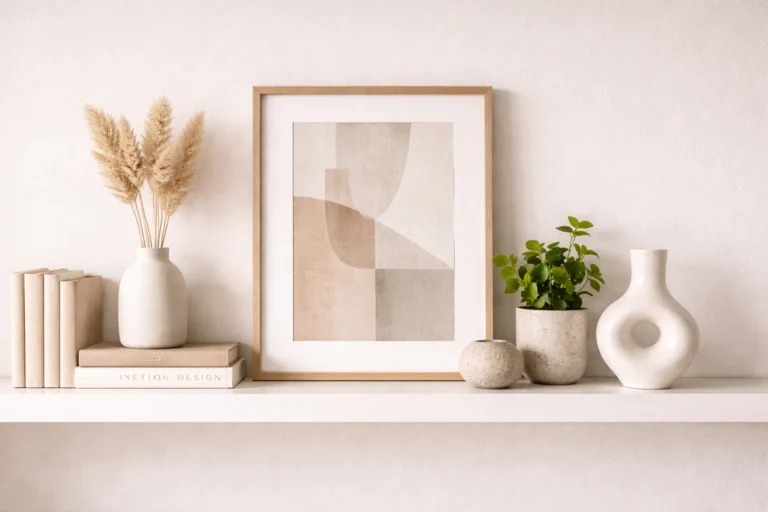
Another key principle of minimalism is functionality. Every item in your living room should have a purpose. Decorative pieces should enhance the space without creating clutter. For example, a single statement vase or a piece of wall art can be more impactful than multiple small decorations.
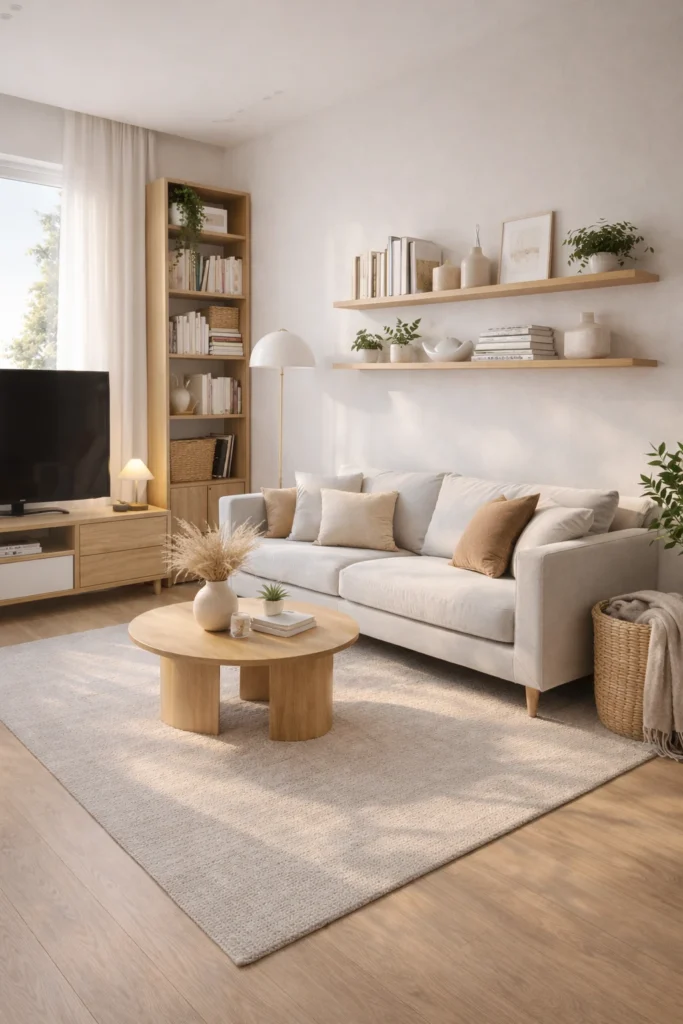
Lighting also contributes to a minimalist aesthetic. Natural light should be maximized as much as possible. Keep window treatments light and airy, such as sheer curtains, to allow sunlight to flow freely into the room.
Storage solutions are essential in maintaining a minimalist look. Hidden storage options like storage benches or cabinets help keep everyday items out of sight, preserving the clean and organized appearance of your living room.
Textures can be used to add depth without compromising simplicity. Soft rugs, linen cushions, and wooden elements can make the space feel warm and inviting while still adhering to minimalist principles.
Ultimately, minimalism is not about having less for the sake of it—it’s about creating a space that feels intentional and visually balanced. When done right, a minimalist apartment living room can feel both luxurious and comfortable.
2. Use Multi-Functional Furniture
In small apartment living rooms, space is a valuable resource, and multi-functional furniture is one of the smartest ways to make the most of it. These versatile pieces are designed to serve more than one purpose, allowing you to maximize functionality without overcrowding your space.
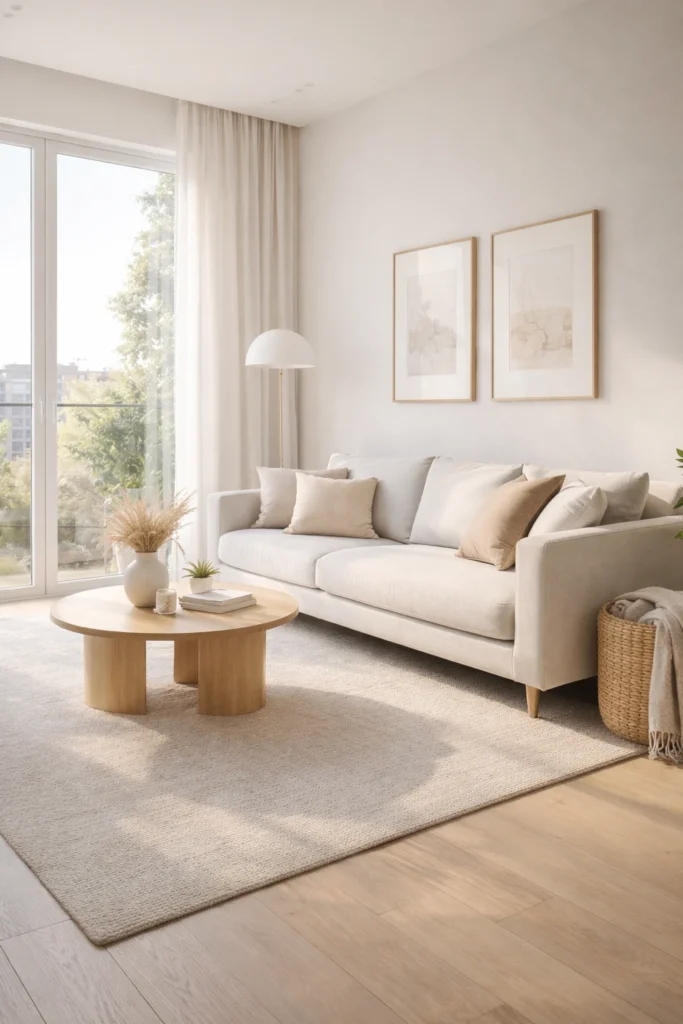
One of the most popular multi-functional furniture pieces is the sofa bed. During the day, it serves as comfortable seating, and at night, it transforms into a bed for guests. This is especially useful in studio apartments or homes without a separate guest room.
Storage ottomans are another excellent addition. They can function as seating, a footrest, or even a coffee table, while also providing hidden storage for items like blankets, magazines, or remote controls. This helps keep your living room organized and clutter-free.
Foldable furniture is ideal for flexible living. Foldable tables or chairs can be easily stored away when not in use, freeing up valuable floor space. This is particularly helpful if you use your living room for multiple purposes, such as dining or working.
Nesting tables are another clever solution. These tables can be stacked together to save space or separated when you need additional surface area. They offer both convenience and style without taking up too much room.
Wall-mounted desks or shelves can transform your living room into a functional workspace without the need for bulky furniture. When not in use, they take up minimal space and keep the room looking clean and open.
Convertible coffee tables that can be raised or expanded are also gaining popularity. They can serve as dining tables, work desks, or storage units, making them incredibly versatile for apartment living.
When choosing multi-functional furniture, it’s important to consider both quality and design. Look for pieces that are durable and easy to use, as well as visually appealing. The goal is to enhance your living room without compromising on style.
Another advantage of multi-functional furniture is that it reduces the need for excess items. Instead of having separate pieces for each function, you can rely on a few well-designed items to meet your needs.
This approach not only saves space but also contributes to a more organized and streamlined living environment. It aligns perfectly with modern living, where efficiency and practicality are key.
By incorporating multi-functional furniture into your apartment living room, you can create a space that is adaptable, stylish, and perfectly suited to your lifestyle.
3. Add Mirrors to Create the Illusion of Space
Mirrors are one of the most powerful tools in interior design, especially for small apartment living rooms. They have the unique ability to reflect light and create the illusion of a larger, more open space.
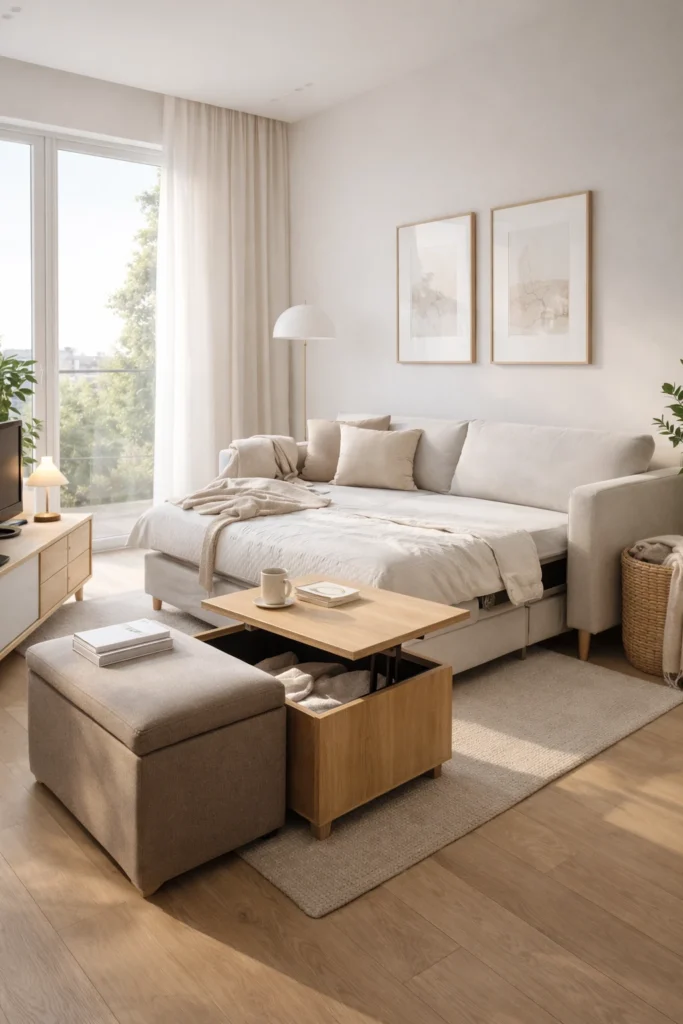
One of the most effective ways to use mirrors is by placing them opposite a window. This allows natural light to bounce around the room, making it feel brighter and more spacious. Even in rooms with limited natural light, mirrors can help amplify whatever light is available.
Large mirrors can act as statement pieces while also serving a functional purpose. A floor-length mirror or an oversized wall mirror can instantly make your living room appear bigger and more elegant.
If you prefer a more decorative approach, consider creating a gallery wall using multiple mirrors in different shapes and sizes. This adds visual interest and depth to your space while maintaining a cohesive look.
Mirrored furniture is another option for adding subtle reflections. Coffee tables, side tables, or cabinets with mirrored surfaces can enhance the sense of space without being overwhelming.
The shape of the mirror can also influence the overall design. Round mirrors soften the look of a room and add a modern touch, while rectangular mirrors provide a more classic and structured appearance.
Placement is key when it comes to mirrors. Avoid placing them in areas where they reflect clutter, as this can have the opposite effect and make your space feel more crowded.
Instead, position mirrors to reflect open areas, light sources, or aesthetically pleasing elements such as artwork or plants. This enhances the overall ambiance of your living room.
Frames also play a role in the design. Choose frames that complement your decor style—whether it’s sleek metal for a modern look or wood for a more rustic feel.
In addition to their visual benefits, mirrors can also make your living room feel more dynamic and lively. They add a layer of depth that flat surfaces simply cannot achieve.
By thoughtfully incorporating mirrors into your apartment living room, you can transform even the smallest space into a bright, airy, and visually appealing environment.
4. Play with Vertical Space
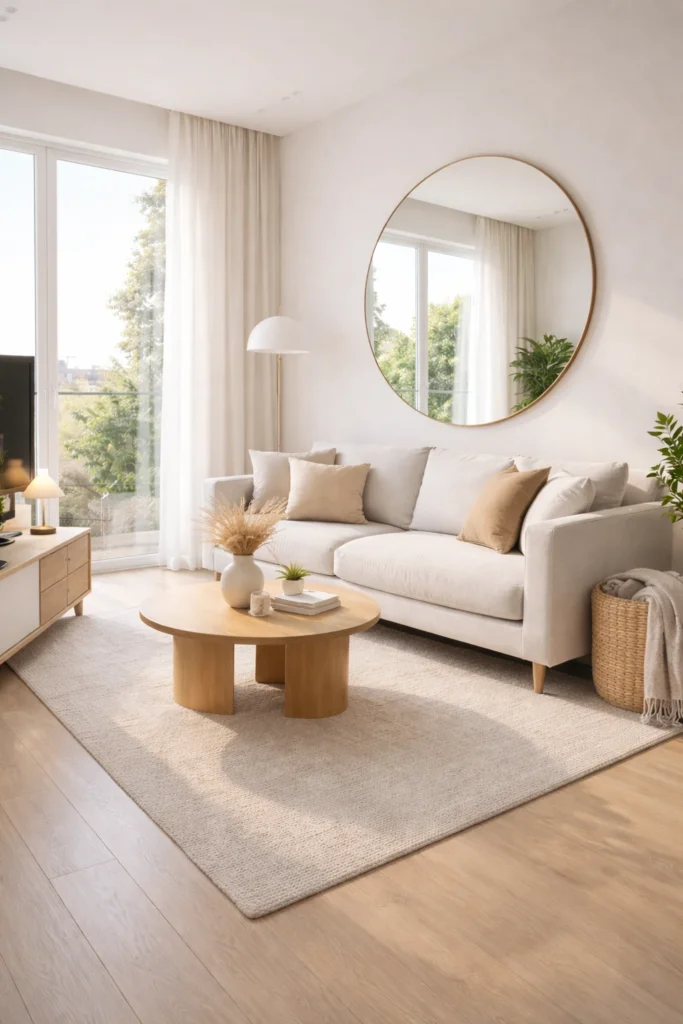
When floor space is limited, the best way to expand your living room is to look upward. Utilizing vertical space is a highly effective strategy for both storage and design in apartment living rooms.
Floating shelves are one of the most versatile solutions. They provide storage without taking up floor space and can be used to display books, plants, or decorative items. Their clean and modern look makes them suitable for a variety of interior styles.
Tall bookcases are another great option. They maximize storage by extending upward rather than outward, making them ideal for small spaces. You can use them to store books, decor, or even baskets for hidden storage.
Wall-mounted TVs are a practical way to free up floor space while creating a sleek and modern look. By eliminating the need for a TV stand, you can open up more room for seating or other furniture.
Hanging plants or wall-mounted planters add a touch of greenery without occupying valuable floor space. They bring life and freshness to your living room while enhancing its visual appeal.
A gallery wall is a creative way to utilize vertical space. By arranging artwork, photos, or prints on your walls, you can personalize your living room and make it feel more dynamic.
Vertical storage solutions also help keep your living room organized. Items that would otherwise clutter your floor can be neatly stored on shelves or mounted units.
When designing vertical spaces, it’s important to maintain balance. Avoid overcrowding your walls with too many items, as this can make the room feel busy and overwhelming.
Spacing and alignment play a crucial role in achieving a polished look. Keep your arrangements symmetrical or intentionally asymmetrical for a modern aesthetic.
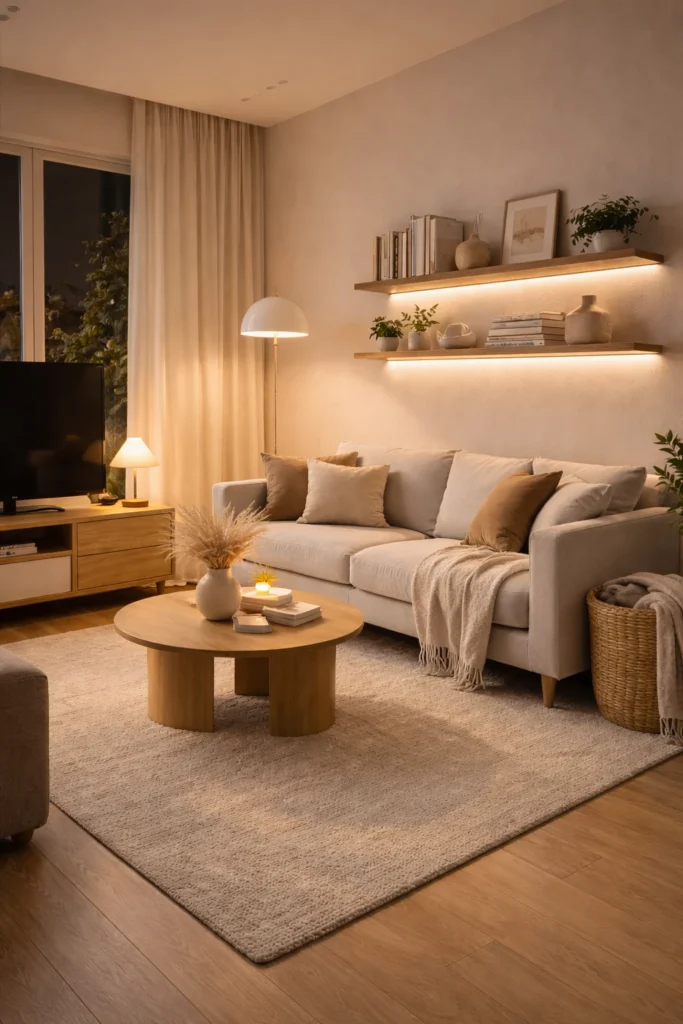
Lighting can also be incorporated into vertical designs. Wall sconces or LED strips can highlight shelves or artwork, adding depth and ambiance to your living room.
By thinking vertically, you can unlock new possibilities for storage and design, making your apartment living room feel more spacious and visually interesting.
5. Layer Lighting for Ambience and Functionality
Lighting is one of the most important elements in interior design, yet it is often overlooked. In apartment living rooms, layered lighting can make a significant difference in both functionality and ambiance.
Layered lighting involves combining different types of lighting to create a well-balanced and versatile environment. The three main types are ambient, task, and accent lighting.
Ambient lighting provides overall illumination for the room. This is typically achieved through ceiling lights or overhead fixtures. It ensures that your living room is adequately lit for general use.
Task lighting is more focused and is used for specific activities such as reading or working. Floor lamps, table lamps, and desk lamps are common examples of task lighting.
Accent lighting is used to highlight specific features or create a certain mood. This can include LED strips, wall sconces, or spotlights that draw attention to artwork or architectural elements.
By combining these three types of lighting, you can create a dynamic and flexible living room that adapts to different needs and occasions.
Warm lighting tones are generally preferred for living rooms, as they create a cozy and inviting atmosphere. Cool lighting can be used sparingly for a more modern or energetic feel.
Placement is key when layering lighting. Distribute light sources evenly throughout the room to avoid dark corners and harsh shadows.
Dimmable lights are a great addition, allowing you to adjust the brightness according to your mood or activity. This adds an extra layer of comfort and control.
Decorative lighting fixtures can also serve as design elements. Stylish floor lamps, pendant lights, or chandeliers can enhance the overall aesthetic of your living room.
In small apartments, lighting can also be used to define different areas within the same space. For example, a floor lamp can create a cozy reading corner, while LED strips can highlight a TV area.
Ultimately, good lighting not only improves visibility but also enhances the mood and style of your living room. It brings all design elements together, creating a cohesive and inviting space.
Conclusion
Designing an apartment living room that is both stylish and functional is entirely achievable with the right approach. By embracing minimalism, investing in multi-functional furniture, using mirrors strategically, maximizing vertical space, and layering your lighting, you can transform even the smallest living room into a beautiful and comfortable space.
Your living room is more than just a place to sit—it’s where you relax, entertain, and express your personal style. With thoughtful design choices, you can create a space that truly feels like home, no matter the size of your apartment.