10 Unique Gallery Wall Ideas That Stand Out
Introduction
A gallery wall is more than just a collection of frames—it’s a visual story that reflects your personality, experiences, and design taste. While traditional gallery walls often follow predictable grids or symmetrical patterns, today’s interior trends are shifting toward more creative, expressive, and unique arrangements. Homeowners are now experimenting with layouts, textures, and mixed elements to make their walls truly stand out rather than blend in.
Creating a unique gallery wall doesn’t require a massive budget or professional design skills. What it does require is intentional planning, a bit of creativity, and the confidence to step outside conventional design rules. Whether you live in a small apartment or a spacious home, your walls offer an opportunity to showcase your style in a meaningful way.
In this guide, we’ll explore ten distinctive gallery wall ideas that push boundaries and elevate your space. Each concept is designed to inspire you while also giving practical tips you can apply immediately. By the end, you’ll have a clear understanding of how to turn any blank wall into a striking focal point.
1. The Asymmetrical Story Wall
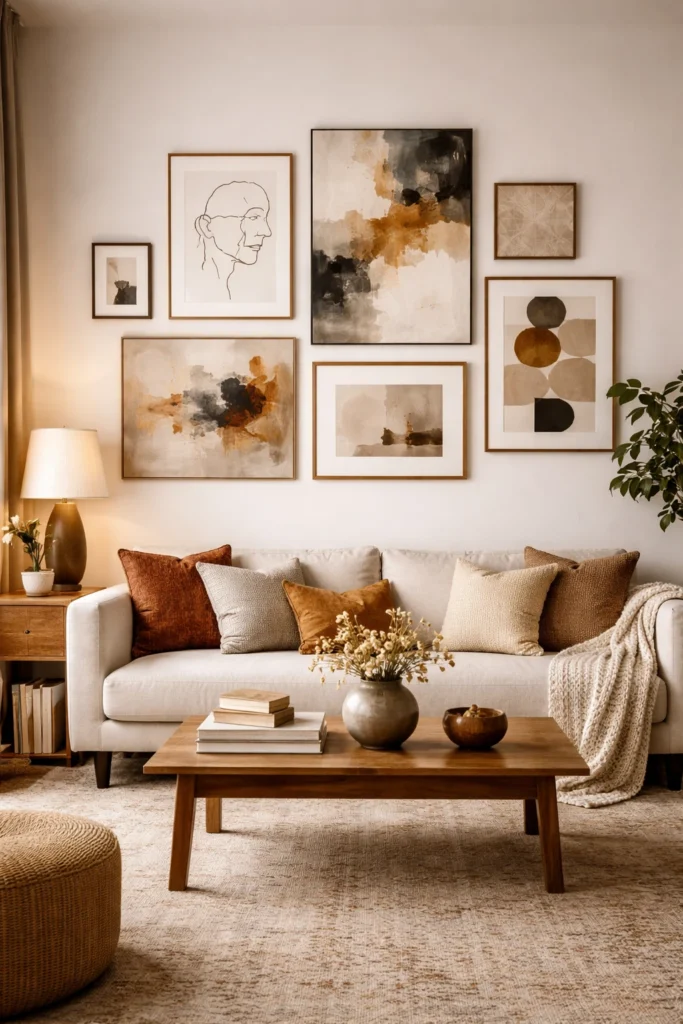
The asymmetrical story wall is perfect for those who want a relaxed yet artistic look that feels natural and unforced. Instead of aligning frames in perfect rows, this style embraces imbalance in a controlled way, creating movement and visual interest. It often starts with a central piece and expands outward organically, allowing each frame to feel like part of a larger story rather than a rigid structure.
This approach works particularly well in living rooms and hallways where you want to create a casual, inviting atmosphere. By mixing frame sizes and orientations, you can guide the viewer’s eye across the wall in a fluid motion. The key is to maintain consistent spacing so the arrangement still feels intentional rather than chaotic.
Another advantage of asymmetry is flexibility. You can easily add new pieces over time without disrupting the entire layout. This makes it ideal for people who like to evolve their decor gradually.
To make this style successful, stick to a cohesive color palette or theme. This ensures that even though the layout is irregular, the overall look remains harmonious. The result is a gallery wall that feels dynamic, personal, and effortlessly stylish.
2. Mixed Media Gallery Wall
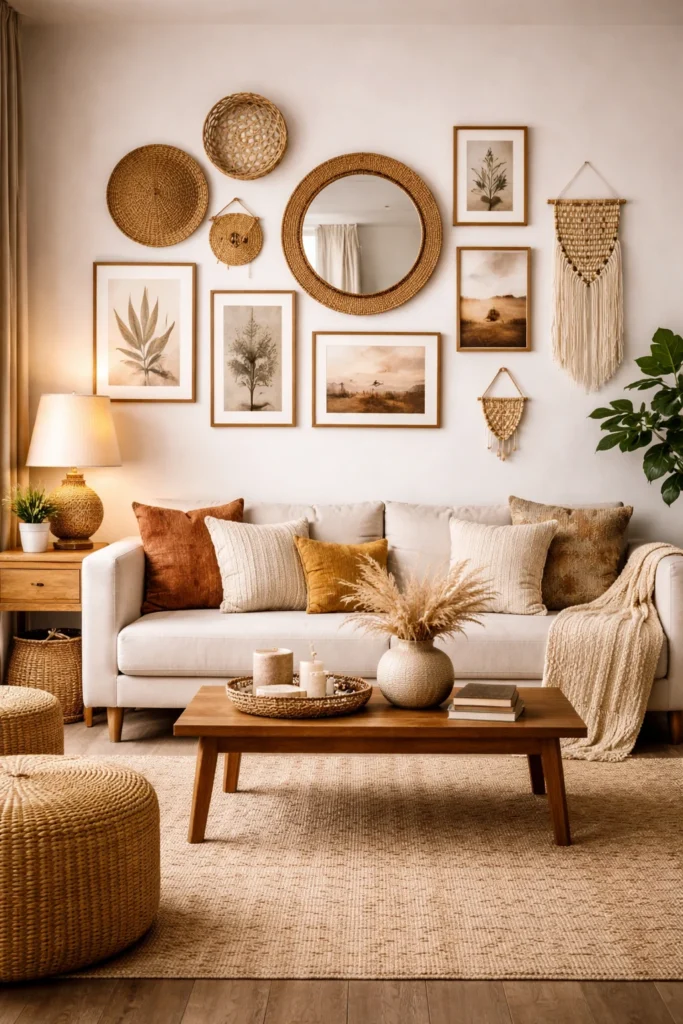
A mixed media gallery wall takes creativity to another level by incorporating more than just framed artwork. It blends different textures and materials such as woven baskets, mirrors, wall hangings, and sculptural elements. This layered approach adds depth and transforms your wall into a multidimensional display.
One of the biggest advantages of this style is its ability to create visual richness. Instead of a flat surface, your wall becomes interactive and tactile. The combination of materials catches light differently, adding subtle variations throughout the day.
This idea works especially well in bohemian, rustic, or eclectic interiors where variety is celebrated. However, even in modern spaces, a carefully curated mix of materials can add warmth and character.
To avoid overwhelming the space, it’s important to maintain some level of cohesion. This could be through color, material type, or theme. For example, sticking to neutral tones can unify diverse elements.
Ultimately, a mixed media gallery wall allows you to think beyond frames and explore a broader range of decorative possibilities, making your space feel curated and unique.
3. Floor-to-Ceiling Gallery Wall
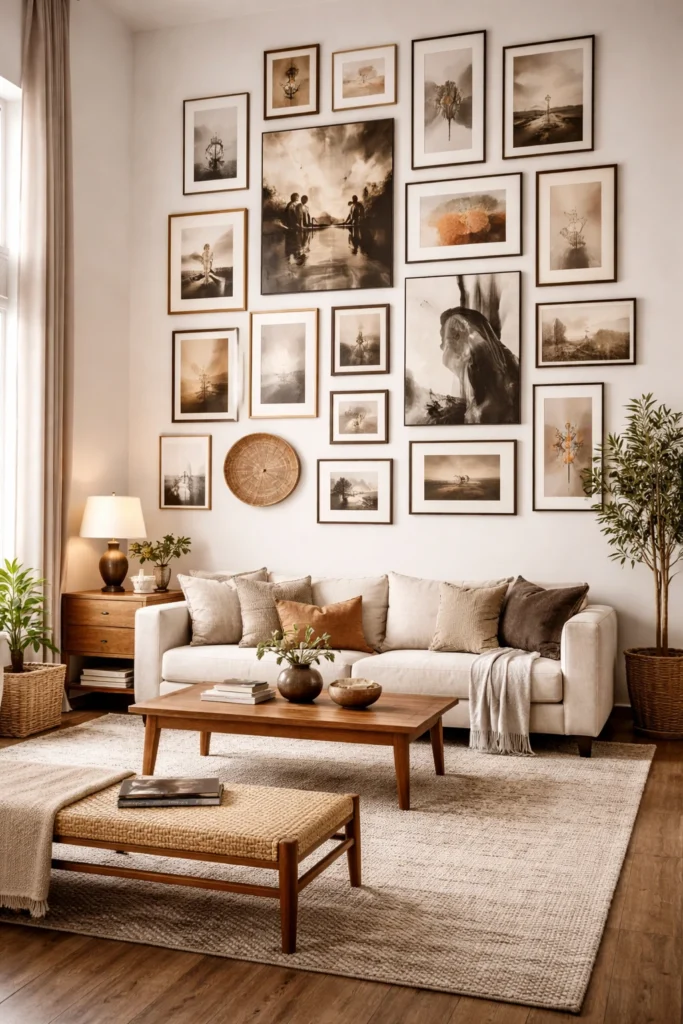
If you want to make a bold statement, a floor-to-ceiling gallery wall is the way to go. This design maximizes vertical space and creates a dramatic visual impact that immediately draws attention. It’s particularly effective in rooms with high ceilings or large empty walls.
By extending your gallery wall from bottom to top, you create a sense of grandeur and scale. This approach can also make a room feel taller and more expansive, enhancing the overall architecture of the space.
To achieve balance, larger pieces are typically placed toward the bottom, while smaller frames fill the upper areas. This creates a stable visual foundation and prevents the design from feeling top-heavy.
Planning is crucial for this style. Mapping out your layout beforehand ensures that the arrangement feels cohesive rather than overwhelming. Consistent spacing and alignment play a key role in maintaining order within the large display.
A floor-to-ceiling gallery wall is perfect for those who want their decor to make a strong impression and serve as the focal point of the room.
4. Monochrome Magic Wall
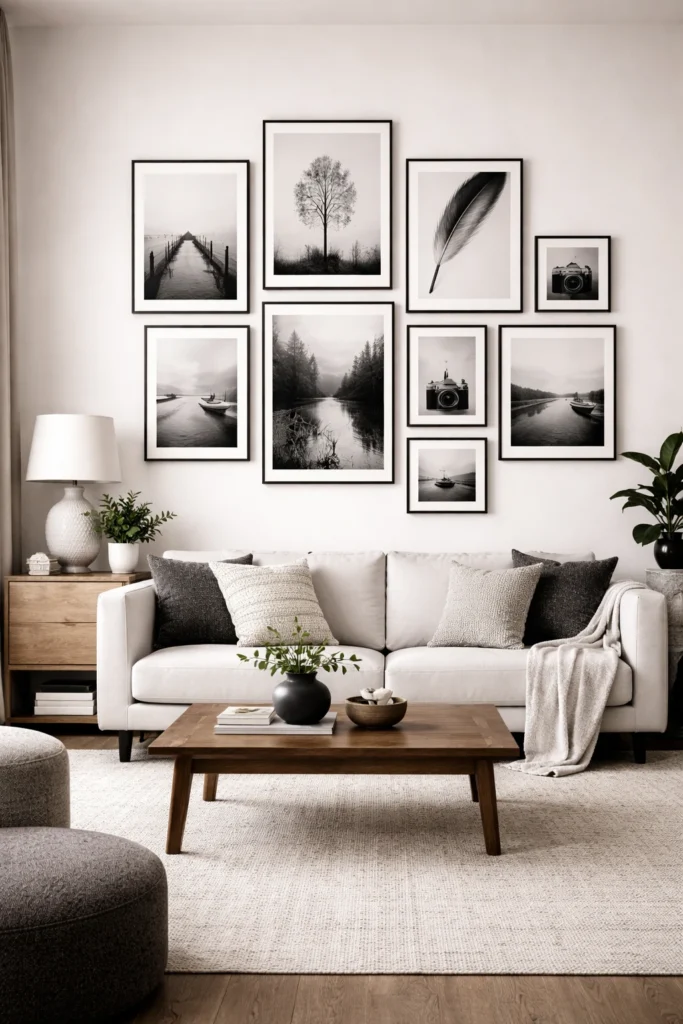
A monochrome gallery wall focuses on a single color palette, often black and white, to create a clean and sophisticated look. This approach emphasizes contrast, composition, and texture rather than color variety.
One of the biggest benefits of a monochrome design is its simplicity. It’s easier to curate and style because all elements naturally work together. This makes it an excellent choice for beginners or those who prefer a minimalist aesthetic.
Despite its simplicity, a monochrome wall can still feel visually rich. Different shades, patterns, and textures add depth without disrupting the cohesive look. Black frames with white mats, for example, create a timeless and elegant effect.
This style works well in modern, Scandinavian, and contemporary interiors where clean lines and subtle details are key. It also pairs beautifully with neutral furniture and decor.
A monochrome gallery wall proves that you don’t need bold colors to create impact—sometimes restraint is what makes a design truly stand out.
5. The Floating Shelf Gallery Wall
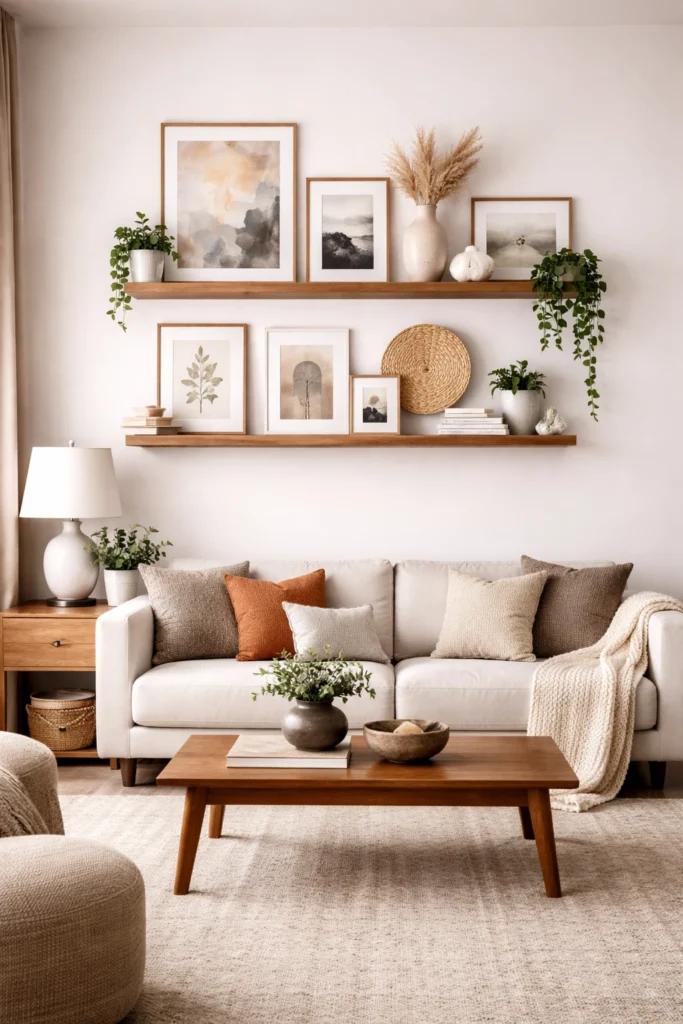
Floating shelves offer a flexible alternative to traditional gallery walls. Instead of hanging each piece individually, you can lean frames against the wall and layer them with other decorative objects.
This approach allows for easy updates and rearrangements, making it ideal for those who like to refresh their decor frequently. You can swap out artwork, add seasonal pieces, or experiment with different compositions without committing to a fixed layout.
Layering is a key element of this style. By overlapping frames and mixing heights, you create depth and a relaxed, curated look. Adding plants, books, or small sculptures enhances the visual interest.
Floating shelves work well in both small and large spaces. In compact areas, they maximize functionality, while in larger rooms, they add a casual yet stylish touch.
This type of gallery wall combines practicality with aesthetics, offering a dynamic and ever-evolving design solution.
6. The Unexpected Shape Layout
Breaking away from traditional rectangular arrangements, the unexpected shape layout introduces creativity through form. Gallery walls can be arranged in shapes like circles, waves, or diagonals to create a unique visual effect.
This style immediately captures attention because it defies expectations. It’s particularly effective in smaller spaces where a standard layout might feel too predictable.
The key to success is planning. Outlining the shape beforehand helps maintain consistency and ensures that the design looks intentional. Even spacing and alignment within the shape are crucial.
This approach works well with both modern and playful interiors. It adds a sense of movement and energy, making the wall feel alive and engaging.
An unexpected shape layout is perfect for those who want to experiment with design and create something truly distinctive.
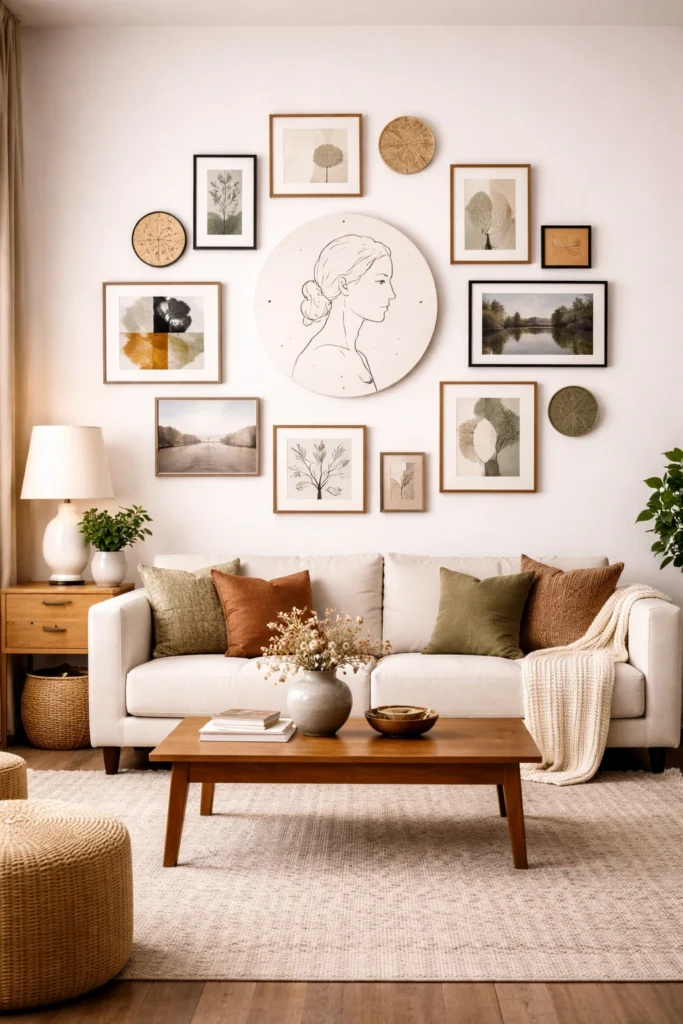
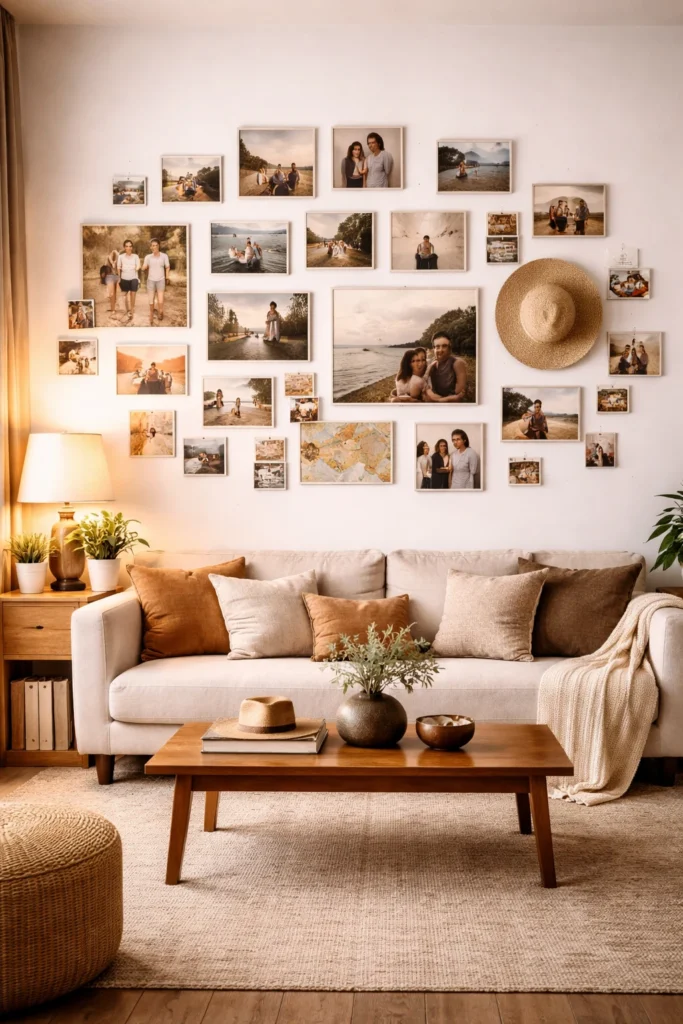
7. Personal Memory Wall
A personal memory wall is one of the most meaningful ways to design a gallery wall. It focuses on displaying photos, souvenirs, and keepsakes that tell your story.
This type of gallery wall goes beyond aesthetics—it creates an emotional connection. Each piece represents a memory, making the wall deeply personal and unique.
To maintain visual harmony, consider using consistent frames or applying a uniform filter to your photos. This helps tie everything together while still allowing individual elements to shine.
This style works beautifully in bedrooms, hallways, or family spaces where you want to create a warm and inviting atmosphere.
A personal memory wall transforms your home into a reflection of your experiences, making it both decorative and meaningful.
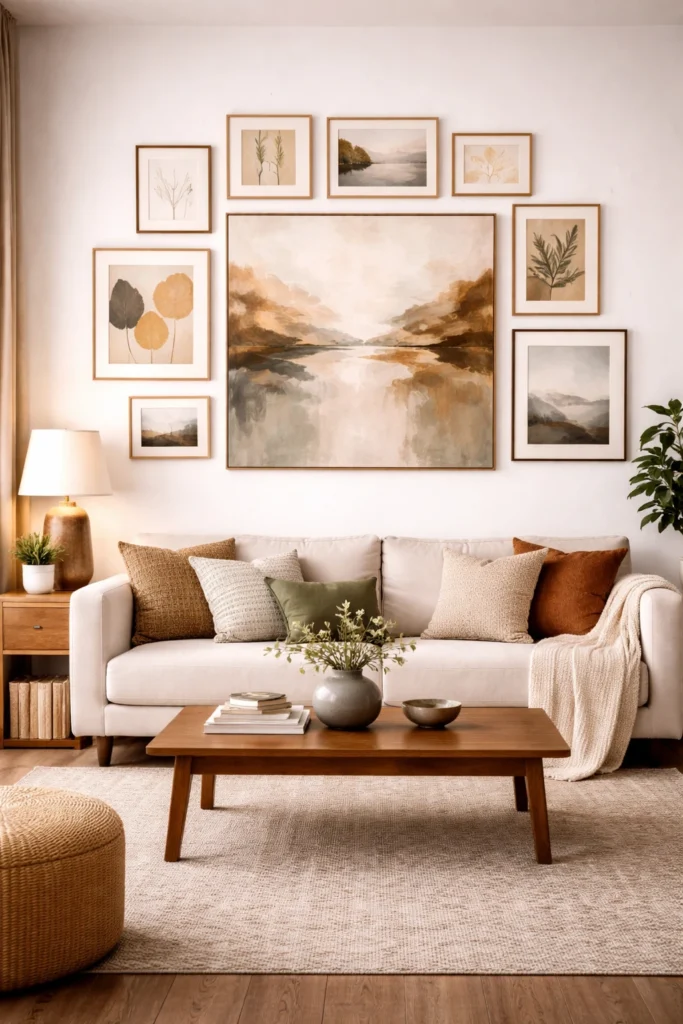
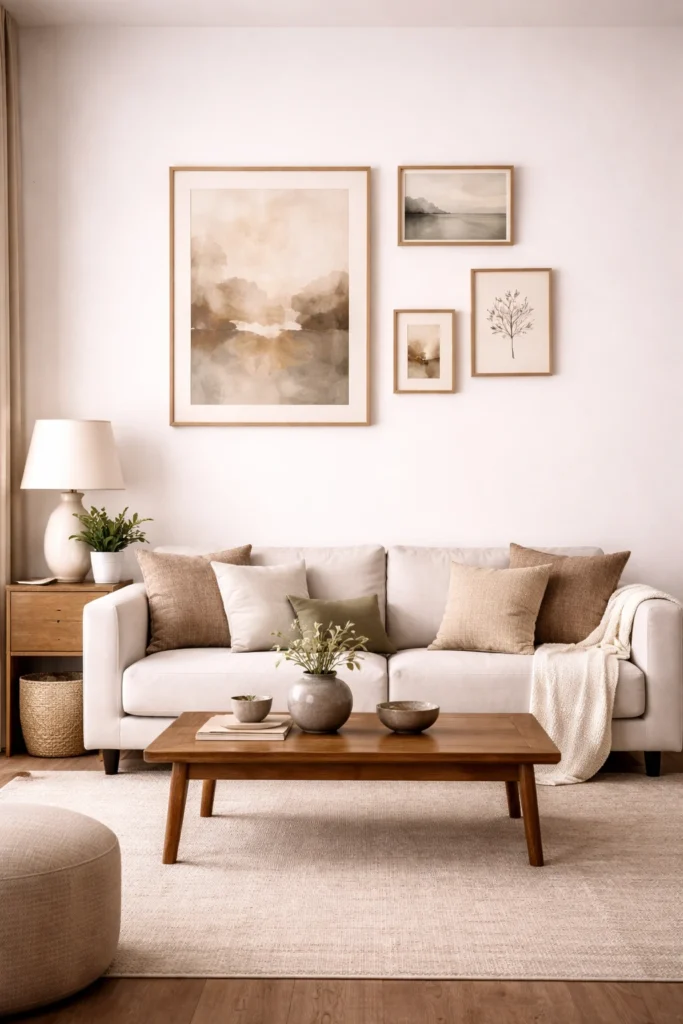
8. The Oversized Anchor + Mini Frames Combo
This style revolves around contrast and hierarchy. A large statement piece serves as the focal point, while smaller frames complement and enhance the overall design.
The oversized piece draws immediate attention, anchoring the arrangement and giving it structure. The smaller frames add detail and balance, preventing the design from feeling too heavy.
This approach works well in modern interiors where clean lines and bold elements are appreciated. It’s also a great way to highlight a favorite artwork or photograph.
Placement is important. Positioning the large piece slightly off-center can create a more dynamic composition.
This combination of scale and contrast results in a gallery wall that is both striking and well-balanced.
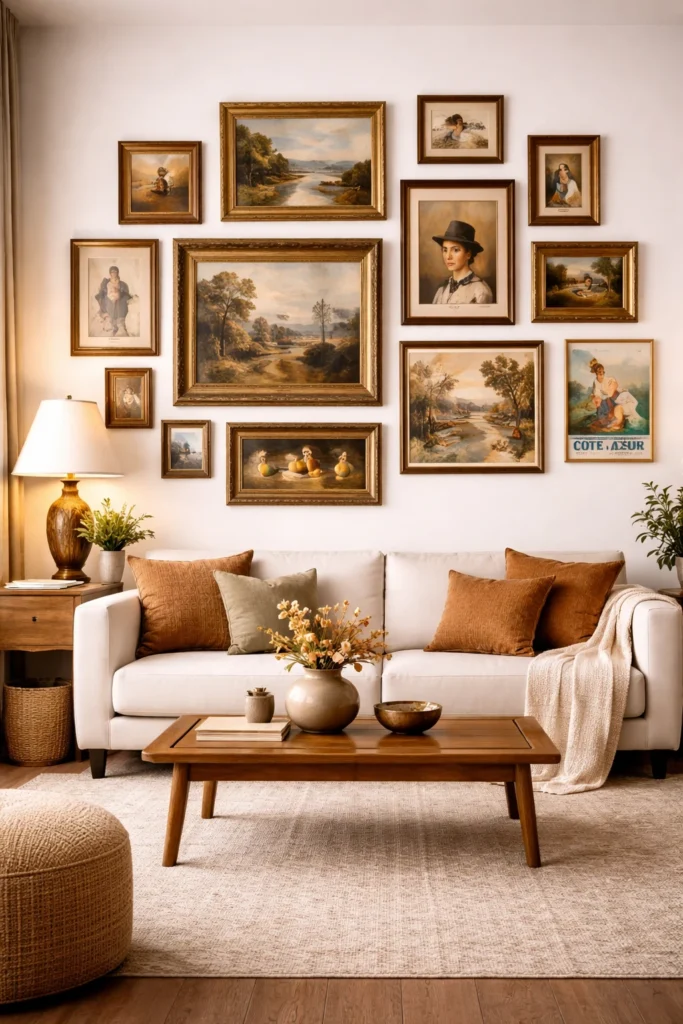
9. The Eclectic Vintage Wall
An eclectic vintage gallery wall combines old and new elements to create a rich, layered look. It often includes antique frames, retro artwork, and unique finds collected over time.
This style is full of character and charm. Each piece tells a story, contributing to a sense of history and personality.
Mixing different frame styles and finishes adds depth, but it’s important to maintain a unifying element such as color or theme.
This approach works well in traditional, rustic, or eclectic interiors where individuality is celebrated.
An eclectic vintage wall feels curated rather than styled, making it a timeless and distinctive choice.
10. The Gallery Wall with Negative Space
Sometimes, the most impactful designs are the simplest. A gallery wall with negative space focuses on minimalism by leaving intentional gaps between pieces.
This approach creates a sense of calm and balance. Each piece has room to breathe, allowing it to stand out individually.
Negative space is particularly effective in modern and minimalist interiors. It prevents the wall from feeling cluttered and enhances the overall aesthetic.
Careful placement is key. Even though the design is sparse, it still requires thoughtful arrangement to maintain harmony.
This style proves that less can indeed be more, offering a refined and elegant alternative to traditional gallery walls.
Conclusion
Designing a unique gallery wall is about more than just filling space—it’s about expressing creativity and telling a story. By exploring different layouts, materials, and concepts, you can create a wall that reflects your personality and enhances your home.
Whether you prefer bold statements or minimalist designs, there’s a gallery wall idea that suits your style. The key is to experiment, plan carefully, and trust your instincts.
Your walls are an opportunity to showcase who you are. With these ideas, you can transform any blank space into something truly remarkable.