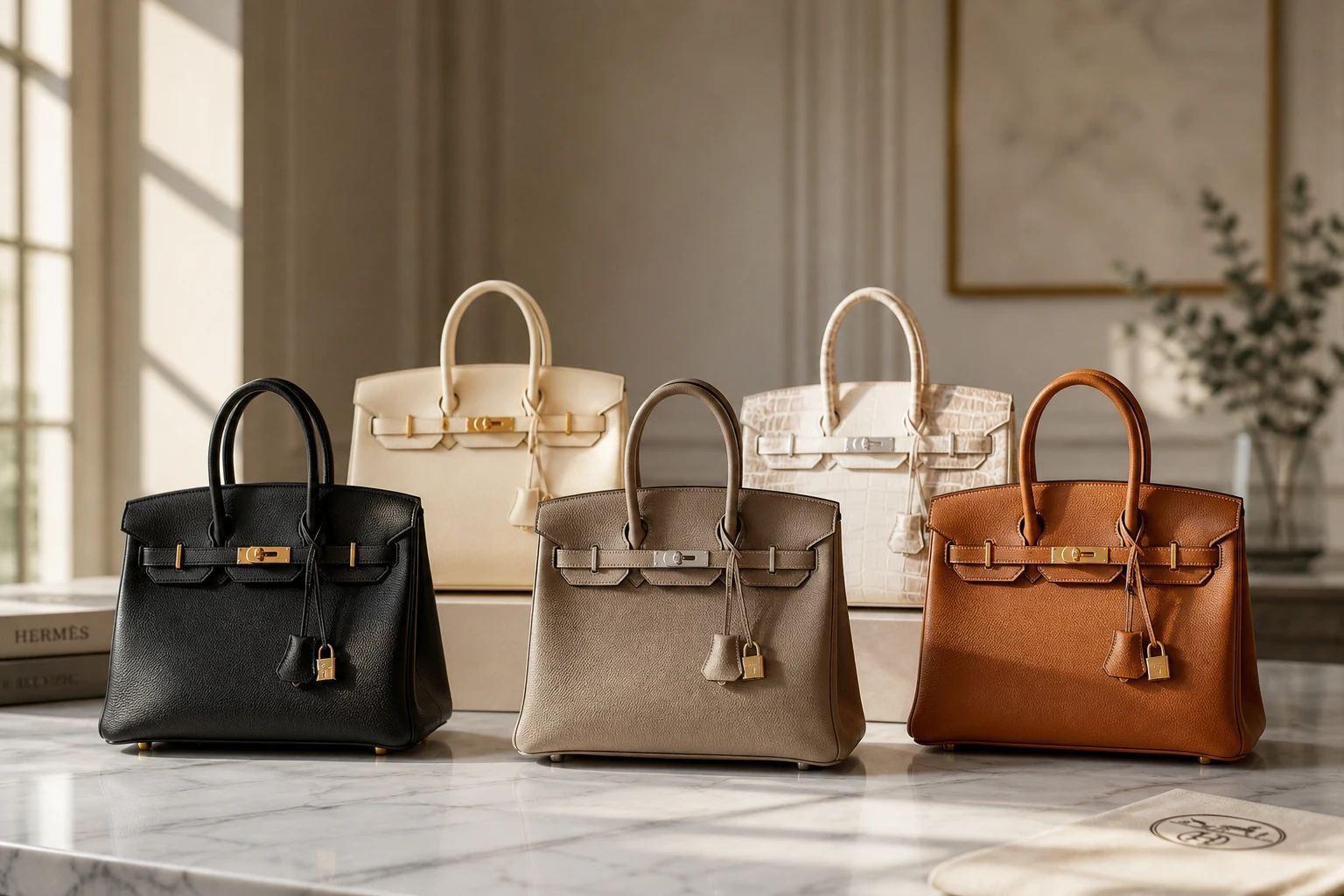
5 Iconic Birkin Bag Luxury That Never Goes Out of Style
Introduction: The Legacy and Cultural Power of the Birkin Bag
The Birkin bag is not merely a handbag—it is a phenomenon that transcends fashion, economics, and culture. Created by Hermès, the Birkin has become one of the most recognizable and coveted luxury items in the world. Its story begins with a chance encounter between actress and singer Jane Birkin and Hermès CEO Jean-Louis Dumas on a flight in the 1980s. What started as a casual conversation about the lack of a practical yet stylish handbag for women quickly evolved into one of the most iconic creations in fashion history.
What makes the Birkin bag so extraordinary is not just its aesthetic appeal but its ability to maintain relevance across generations. In an industry driven by fast-changing trends, the Birkin remains untouched by time. It does not rely on seasonal reinvention or aggressive marketing campaigns; instead, its allure comes from scarcity, craftsmanship, and heritage. Each bag is handmade by skilled artisans, often requiring more than 20 hours of meticulous work, ensuring that no two pieces are exactly alike.
The Birkin’s cultural significance extends far beyond the runway. It has become a symbol of success, power, and exclusivity, often spotted on the arms of celebrities, business leaders, and royalty. Yet, despite its global fame, it remains elusive. You cannot simply walk into a boutique and purchase a Birkin on demand. This controlled scarcity fuels its desirability, turning it into both a fashion statement and an investment asset.
In this blog, we will explore five iconic Birkin bags that have defined luxury over the years. Each one tells a unique story of design, material, and cultural impact, demonstrating why the Birkin continues to reign as the ultimate symbol of timeless elegance.
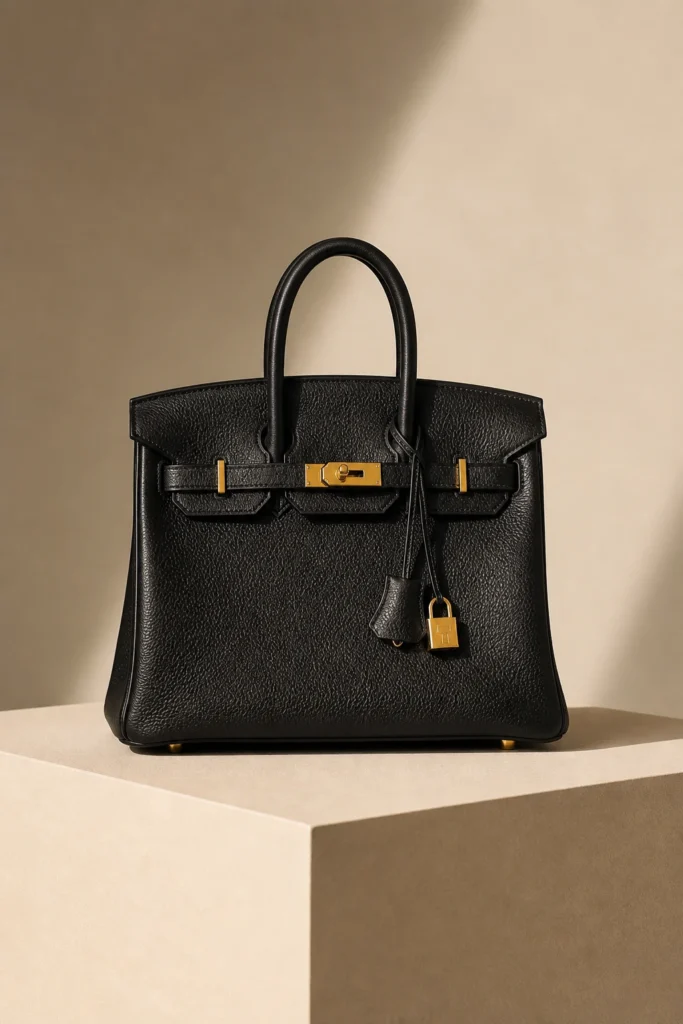
1. The Classic Black Togo Leather Birkin: The Definition of Understated Power
The classic black Togo leather Birkin stands as the purest expression of quiet luxury, a concept that has gained renewed attention in modern fashion discourse but has always been embodied by this timeless piece. Black, as a color, has long been associated with sophistication, authority, and versatility, and when combined with the structured elegance of the Birkin silhouette, it creates a handbag that feels both powerful and effortlessly refined.
Togo leather, introduced by Hermès in the late 1990s, is known for its fine-grained texture and exceptional durability. Unlike smoother leathers, Togo is resistant to scratches and retains its shape over time, making it an ideal choice for those who view their Birkin not just as a statement piece but as a functional accessory. The slightly matte finish of the leather adds depth to the black tone, preventing it from appearing flat or overly polished.
What truly sets the black Togo Birkin apart is its adaptability. It seamlessly transitions between contexts, complementing both formal business attire and casual ensembles. Whether paired with a tailored suit or a minimalist monochrome outfit, it elevates the overall look without demanding attention. This is the essence of understated power—the ability to command presence without excess.
Over the years, the black Birkin has become a staple among collectors and first-time buyers alike. It is often considered a foundational piece, the starting point of a Birkin journey. Yet, despite its perceived simplicity, it never loses its allure. In a world where trends come and go, the black Togo Birkin remains constant, proving that true luxury lies in timelessness rather than novelty.
2. The Gold Clemence Birkin: Warmth Heritage and Everyday Elegance
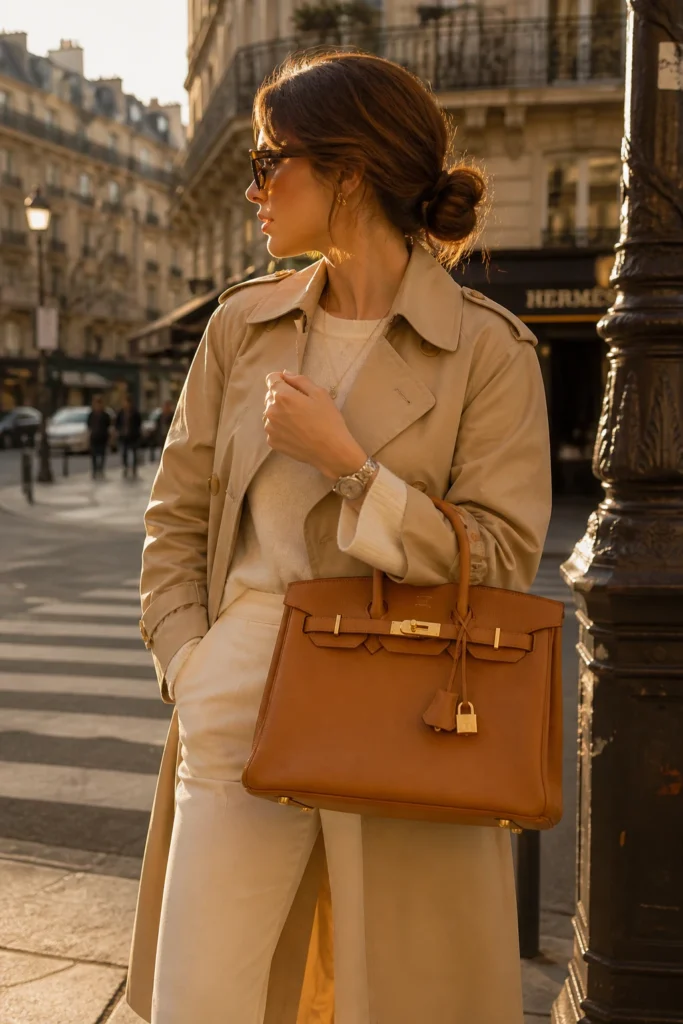
The gold Clemence Birkin is perhaps one of the most recognizable and beloved variations of the bag, celebrated for its warm, inviting tone and relaxed structure. The color “gold,” a signature shade of Hermès, is not metallic but rather a rich caramel hue that evokes a sense of heritage and tradition. It is a color that feels both grounded and luxurious, making it a favorite among those who appreciate subtle elegance.
Clemence leather, derived from baby bull hide, is softer and more supple than Togo, giving the bag a slightly slouchy appearance. This relaxed structure adds a sense of ease to the Birkin, making it feel less formal and more approachable. Over time, the leather develops a natural patina, enhancing its character and individuality. This evolution is part of what makes the gold Clemence Birkin so special—it tells a story of use, experience, and personal style.
Unlike the stark sophistication of black, the gold Birkin exudes warmth. It pairs beautifully with neutral tones such as beige, white, and cream, creating a harmonious and effortless aesthetic. At the same time, it can complement bolder colors, acting as a grounding element in more vibrant outfits.
For many collectors, the gold Clemence Birkin represents the perfect balance between luxury and practicality. It is a bag that can be used without losing its charm, making it both a fashion statement and a functional investment. Its enduring popularity is a testament to its versatility and timeless appeal, proving that luxury does not always have to be extravagant to be impactful.
3. The Himalayan Crocodile Birkin: The Pinnacle of Luxury and Rarity
The Himalayan Crocodile Birkin occupies a realm of its own within the world of luxury fashion, often regarded as the ultimate status symbol. Crafted from Niloticus crocodile skin, this bag is distinguished by its breathtaking gradient color, which transitions from smoky gray to luminous white. The effect is reminiscent of the snow-capped peaks of the Himalayas, hence its name.
What makes this Birkin truly exceptional is not just its aesthetic but its rarity. The process of creating a Himalayan Birkin is complex, requiring highly skilled artisans and the finest materials. Each piece is meticulously dyed to achieve the signature gradient, a technique that demands precision and expertise. As a result, only a limited number of these bags are produced each year.
Many Himalayan Birkins are further adorned with diamond-encrusted hardware, elevating them from luxury accessories to collectible works of art. These versions have fetched record-breaking prices at auctions, with some selling for hundreds of thousands of dollars. In this context, the bag becomes more than a fashion item—it is a symbol of wealth, exclusivity, and connoisseurship.
Owning a Himalayan Birkin is often seen as the ultimate achievement for collectors. It represents not just financial capability but also access to a world that is deliberately kept out of reach for most. Its value continues to appreciate over time, making it one of the most sought-after investment pieces in the luxury market. In every sense, the Himalayan Birkin embodies the idea that true luxury is defined by rarity and craftsmanship.

4. The Birkin 30 in Etoupe: Modern Neutrality and Effortless Sophistication
The Birkin 30 in Etoupe represents a modern interpretation of classic luxury, offering a fresh yet timeless alternative to traditional colors. Etoupe, a sophisticated blend of gray and taupe, has become one of Hermès’ most popular shades, admired for its versatility and understated elegance. It is a color that adapts effortlessly to different styles and seasons, making it a staple in contemporary wardrobes.
One of the defining features of the Etoupe Birkin is its contrast stitching, which adds a subtle yet distinctive detail to the bag. This element enhances the visual depth of the design, giving it a refined and polished appearance without being overly decorative. The result is a handbag that feels both modern and rooted in tradition.
The 30 cm size is particularly among users, as it strikes the perfect balance between functionality and aesthetics. It is spacious enough to carry daily essentials while maintaining a sleek and manageable silhouette. This practicality, combined with its elegant design, makes it an ideal choice for those who value both form and function.
In many ways, the Etoupe Birkin reflects the evolution of luxury fashion. It moves away from overt displays of wealth and instead embraces a more subtle, nuanced approach to style. It is a bag that speaks to those who appreciate refinement and sophistication, proving that modern luxury is as much about restraint as it is about opulence.

5. The Limited Edition Faubourg Birkin: Artistry Storytelling and Heritage
The Faubourg Birkin stands as a testament to the artistic and narrative capabilities of Hermès, transforming the traditional handbag into a storytelling canvas. Inspired by the façade of the Hermès flagship store located at 24 Rue du Faubourg Saint-Honoré in Paris, this limited-edition piece captures the essence of the brand’s heritage in a uniquely creative way.
Unlike standard Birkins, the Faubourg version incorporates multiple materials and intricate detailing to recreate the architectural elements of the boutique. From the carefully crafted windows to the textured surfaces that mimic the building’s exterior, every aspect of the bag is designed with precision and imagination. This level of detail elevates the bag from a luxury accessory to a work of art.
Due to its limited production, the Faubourg Birkin is highly coveted among collectors. It is not simply purchased—it is acquired, often through established relationships with the brand. This exclusivity adds to its allure, making it a symbol of both creativity and status.
What makes the Faubourg Birkin particularly significant is its ability to merge tradition with innovation. While it retains the classic structure of the Birkin, it introduces a new dimension of design that challenges conventional notions of what a handbag can be. It is a celebration of craftsmanship, storytelling, and the enduring legacy of Hermès.

Why the Birkin Bag Continues to Define Timeless Luxury
The enduring appeal of the Birkin bag can be attributed to a combination of factors that extend beyond aesthetics. At its core, the Birkin represents a commitment to quality and craftsmanship that is increasingly rare in today’s fast-paced fashion industry. Each bag is handmade by a single artisan, ensuring a level of attention to detail that cannot be replicated by mass production.
Exclusivity also plays a crucial role in maintaining the Birkin’s status. The controlled supply and selective distribution create a sense of scarcity that enhances its desirability. Unlike other luxury items that are widely accessible, the Birkin remains intentionally elusive, reinforcing its position as a symbol of privilege and refinement.
Another key factor is its investment value. Over the years, Birkin bags have consistently appreciated in price, often outperforming traditional assets such as gold and stocks. This makes them not only a fashion statement but also a strategic financial asset, appealing to both collectors and investors.
Culturally, the Birkin has become synonymous with success and sophistication. Its presence in films, television, and celebrity culture has cemented its status as an icon. Yet, despite its widespread recognition, it never feels overexposed—a testament to the brand’s careful management of its image.
Conclusion: The Eternal Allure of the Birkin Bag
The Birkin bag is more than a luxury accessory; it is a symbol of timeless elegance, craftsmanship, and cultural significance. Each of the five iconic Birkins explored in this blog represents a different facet of what makes the bag so extraordinary—from the understated power of the black Togo to the unparalleled exclusivity of the Himalayan crocodile.
In a world where trends are fleeting and fashion is constantly evolving, the Birkin remains a constant. It does not chase relevance; it defines it. Its enduring appeal lies in its ability to balance tradition and innovation, exclusivity and accessibility, beauty and functionality.
Ultimately, owning a Birkin is not just about possessing a handbag—it is about becoming part of a legacy. It is a statement of taste, a reflection of, and an investment in something that will never go out of style.